

From Choosing the Right Country & University to Admission, Scholarships, Visa & Pre-Departure — A Complete Guide for Pakistani Students
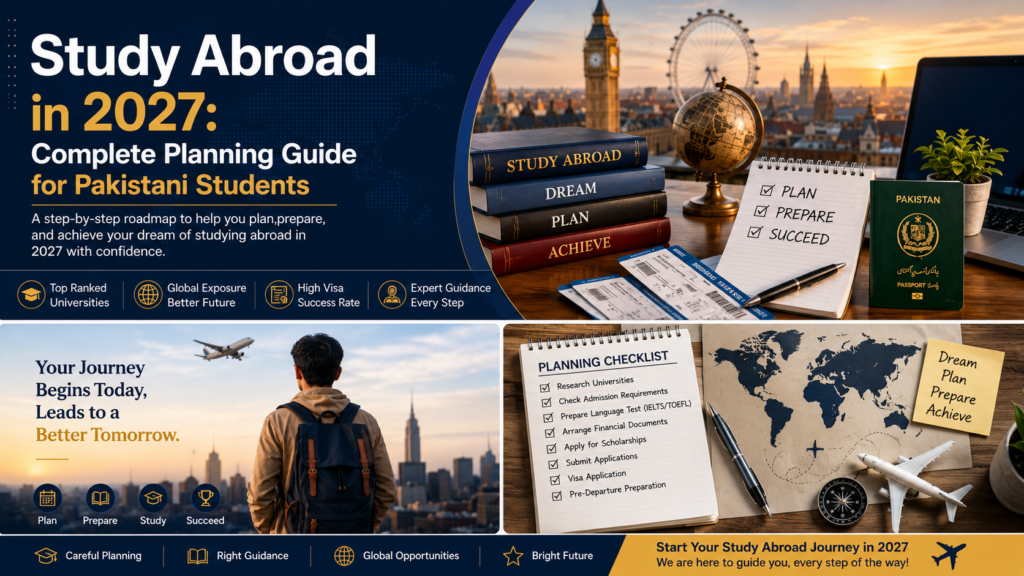
Planning to study abroad in 2027? For Pakistani students, studying overseas can be an exciting opportunity to gain an international education, develop valuable academic and professional skills, experience a new culture, and build a successful global career.
However, a successful study-abroad journey does not happen overnight. It requires careful planning, realistic decision-making, proper financial preparation, and timely documentation. Starting early can give you more time to explore your options, meet university requirements, apply for scholarships, prepare your finances, and complete the visa process without unnecessary stress.
From choosing the right country, university, and study program to preparing your academic documents, arranging finances, exploring scholarship opportunities, meeting English-language requirements, submitting applications, and completing the visa process, every step plays an important role in your journey.
For Pakistani students, it is also important to consider factors such as tuition fees, living costs, part-time work opportunities, post-study options, visa requirements, university recognition, and long-term career prospects before making a final decision.
This complete guide will help you understand the key steps involved in planning your 2027 study-abroad journey, so you can make informed decisions, avoid common mistakes, and prepare for your international education journey with greater confidence.
Start planning early. Choose wisely. Prepare properly. Build your future globally.
Your 2027 Study Abroad Journey Starts with Early Planning.
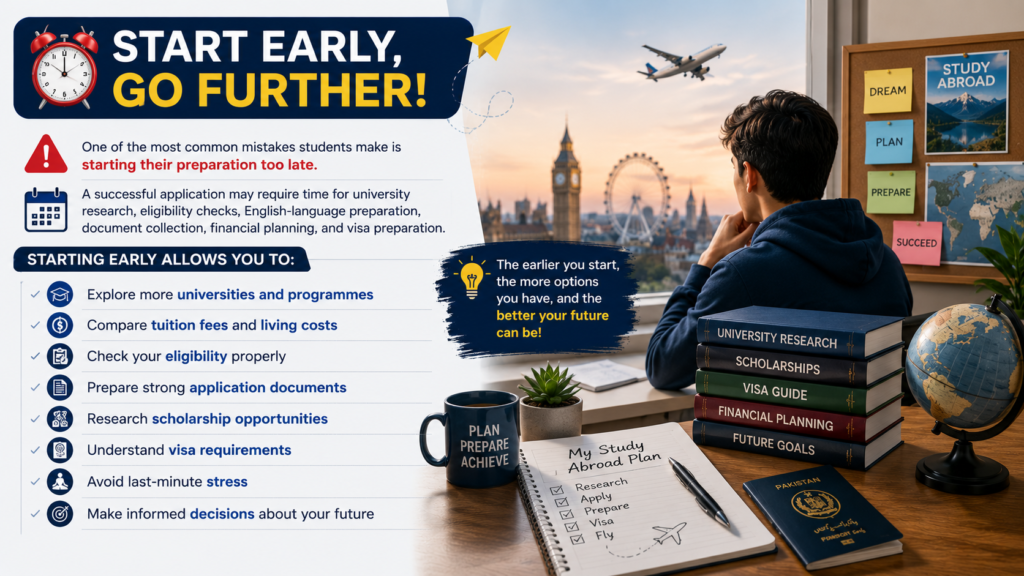
One of the most common mistakes students make is starting their preparation too late.
A successful application may require time for university research, eligibility checks, English-language preparation, document collection, financial planning, and visa preparation.
STARTING EARLY ALLOWS YOU TO:
✓ Explore more universities and programmes
✓ Compare tuition fees and living costs
✓ Check your eligibility properly
✓ Prepare strong application documents
✓ Research scholarship opportunities
✓ Understand visa requirements
✓ Avoid last-minute stress
✓ Make informed decisions about your future
Does this destination offer the right course for me?
Can I realistically manage the overall cost?
Does it support my academic and career goals?
The right destination is the one that fits your profile, budget, and future goals.
Choose the Right Path to Your Future.
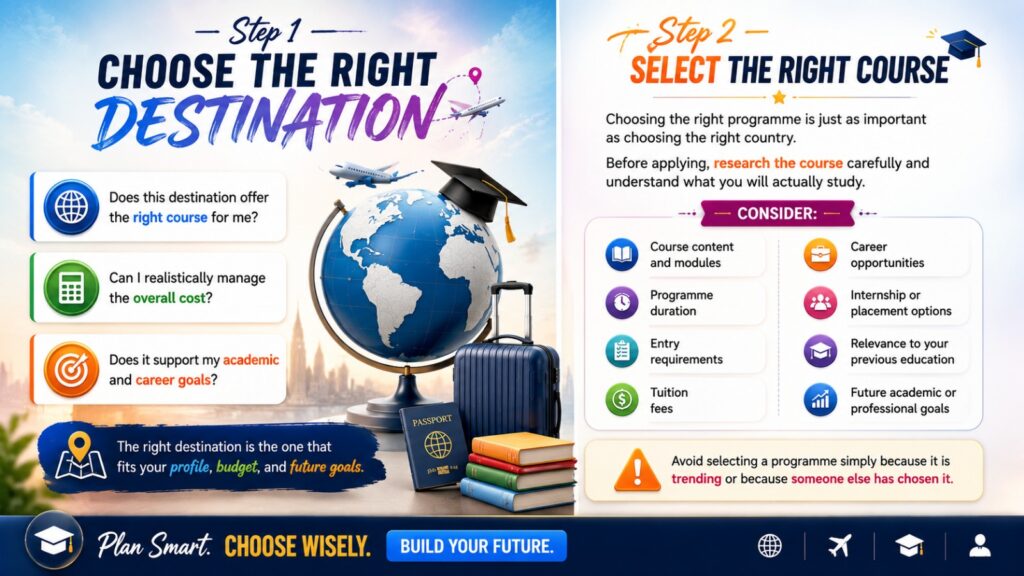
Choosing the right programme is just as important as choosing the right country.
Before applying, research the course carefully and understand what you will actually study.
Consider:
- Course content and modules
- Programme duration
- Entry requirements
- Tuition fees
- Career opportunities
- Internship or placement options
- Relevance to your previous education
- Future academic or professional goals
Avoid selecting a programme simply because it is trending or because someone else has chosen it.
Check Your Eligibility Before You Apply.
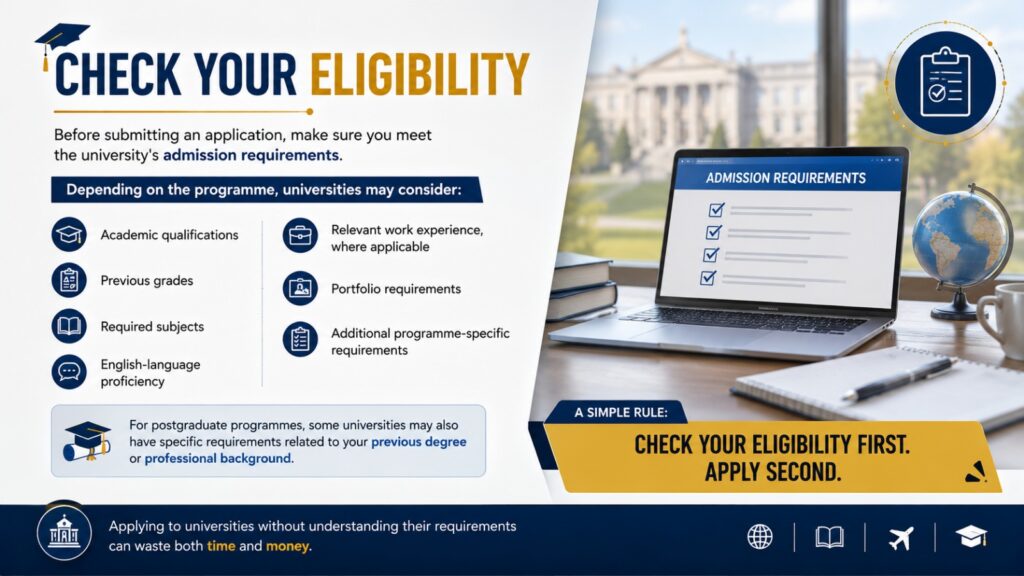
Before submitting your application to a university, it is important to carefully check whether you meet the admission requirements for your chosen programme. Every university and course can have different eligibility criteria, so understanding these requirements in advance can help you avoid unnecessary delays, rejected applications, and additional costs.
What Do Universities Usually Check?
Depending on the programme and level of study, universities may consider several factors:
1. Academic Qualifications
Universities usually require applicants to have completed a specific level of education before admission. For example, undergraduate programmes may require a high school or equivalent qualification, while postgraduate programmes generally require a relevant bachelor’s degree.
2. Previous Grades
Your academic performance may also be considered during the admission process. Some programmes have a minimum grade, percentage, GPA, or equivalent academic requirement that applicants must meet.
3. Required Subjects
Certain programmes may require students to have studied specific subjects in their previous education. For example, science, engineering, business, or computer-related programmes may have particular subject prerequisites.
4. English-Language Proficiency
If the programme is taught in English, the university may ask for proof of English-language proficiency. Depending on the institution and programme, this could include an accepted English-language test or another form of proof specified by the university.
5. Relevant Work Experience
Some programmes, particularly certain postgraduate or professional courses, may require relevant work experience. Always check whether experience is mandatory or simply preferred.
6. Portfolio Requirements
Creative programmes such as design, architecture, art, or media may require a portfolio of your previous work. Make sure you understand the required format, number of samples, and submission guidelines.
7. Programme-Specific Requirements
Some courses have additional requirements beyond the standard admission criteria. These may include entrance tests, interviews, personal statements, recommendation letters, professional qualifications, or other supporting documents.
Postgraduate Applicants
If you are applying for a postgraduate programme, pay particular attention to the relationship between your previous degree and your chosen course. Some universities may require a specific academic background, relevant subjects, professional experience, or a particular type of bachelor’s degree.
A Simple Rule: Check First, Apply Second
Before paying an application fee or submitting your documents, carefully review the official admission requirements of your chosen university and programme. If any requirement is unclear, contact the university’s admissions team for clarification.
Applying without checking your eligibility can waste both time and money. A few minutes spent reviewing the requirements beforehand can help you choose suitable programmes and make your application process much smoother.
Remember: The right application starts with knowing that you are eligible.
Documents You May Need.
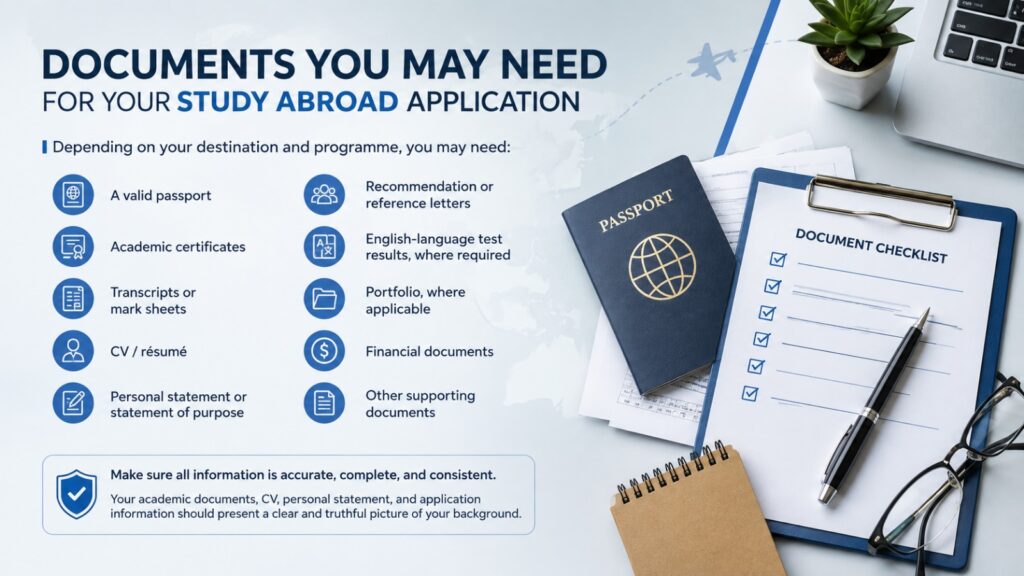
FOR YOUR STUDY ABROAD APPLICATION
Depending on your destination and programme, you may need:
- A valid passport
- Academic certificates
- Transcripts or mark sheets
- CV / résumé
- Personal statement or statement of purpose
- Recommendation or reference letters
- English-language test results, where required
- Portfolio, where applicable
- Financial documents
- Other supporting documents
IMPORTANT
Make sure all information is accurate, complete, and consistent.
Your academic documents, CV, personal statement, and application information should present a clear and truthful picture of your background.
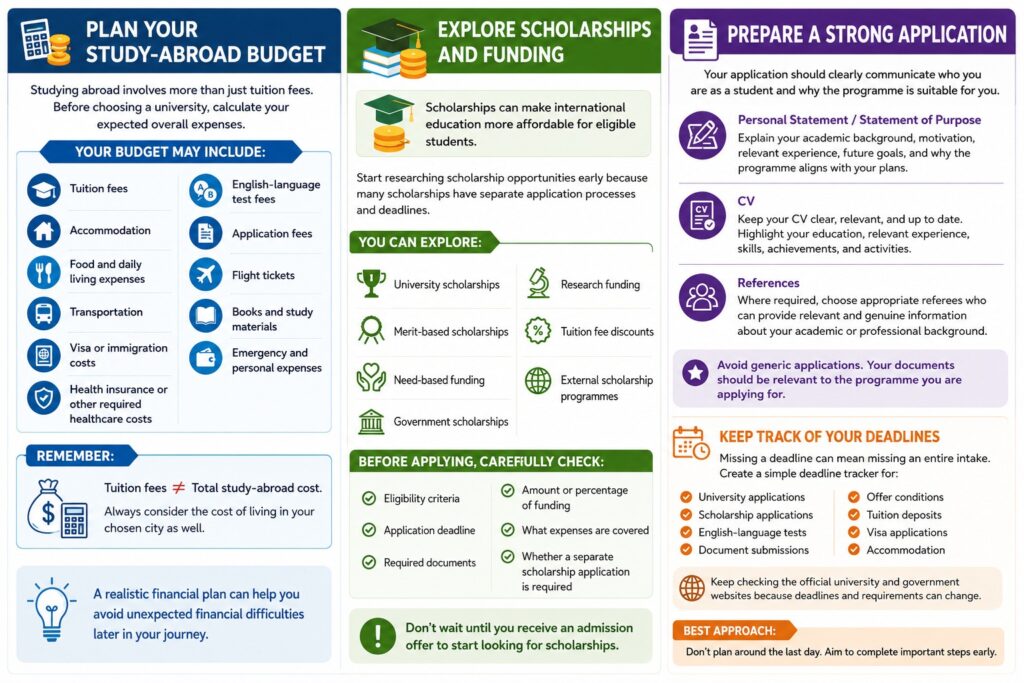
PLAN YOUR STUDY-ABROAD BUDGET
Studying abroad involves more than tuition fees. Plan for your total expected expenses.
YOUR BUDGET MAY INCLUDE:
- Tuition & accommodation
- Food & transportation
- Visa & health insurance
- Test & application fees
- Flights & study materials
- Emergency & personal expenses
Remember:
Tuition Fees ≠ Total Study-Abroad Cost
Consider the cost of living in your chosen city and plan realistically.
EXPLORE SCHOLARSHIPS & FUNDING
Start researching scholarships early, as deadlines and requirements may vary.
EXPLORE:
- University scholarships
- Merit & need-based funding
- Government scholarships
- Research funding
- Tuition discounts
- External scholarships
CHECK BEFORE APPLYING:
Eligibility • Deadline • Documents • Funding Amount • Covered Expenses
Don’t wait for an admission offer to start your scholarship search.
PREPARE A STRONG APPLICATION
Make your application clear, relevant, and personal.
FOCUS ON:
- Personal Statement: Goals, motivation & experience
- CV: Education, skills & achievements
- References: Relevant & genuine recommendations
Avoid generic applications. Tailor your documents to the programme.
KEEP TRACK OF YOUR DEADLINES
Create a tracker for:
University Applications • Scholarships • Tests • Documents • Deposits • Visa • Accommodation
Always check official university and government websites for updates.
BEST APPROACH:
Start early. Don’t wait until the last day.
STAY INFORMED & AVOID FALSE PROMISES.
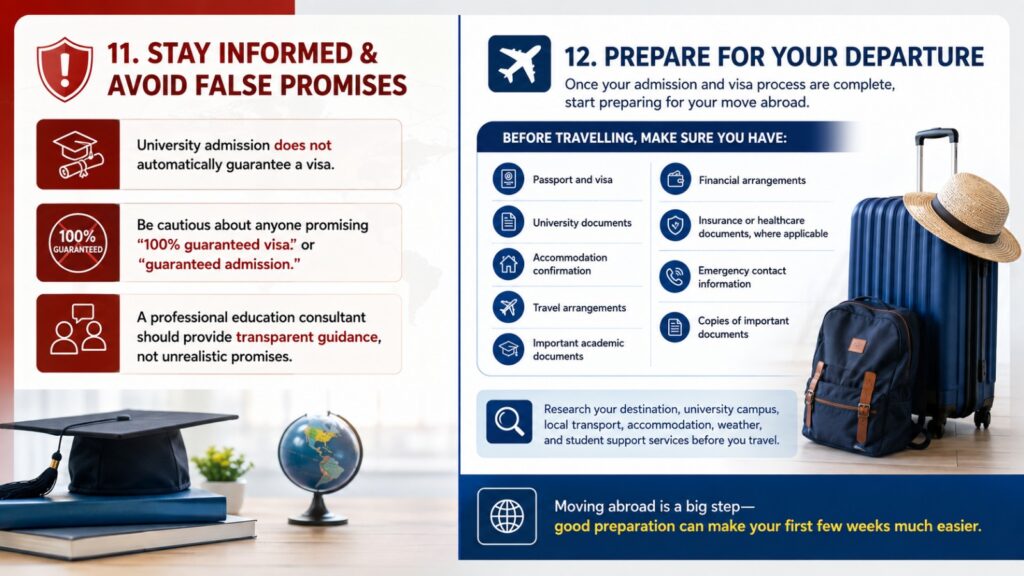
University admission does not guarantee a visa.
Be careful of anyone promising:
- “100% guaranteed visa”
- “Guaranteed admission”
A professional education consultant provides transparent guidance — not unrealistic promises.
PREPARE FOR YOUR DEPARTURE
Once your admission and visa are complete, prepare for your move abroad.
BEFORE YOU TRAVEL, MAKE SURE YOU HAVE:
- Passport & visa
- University documents
- Accommodation confirmation
- Travel arrangements
- Financial arrangements
- Insurance documents
- Emergency contacts
- Copies of important documents
BEFORE YOU GO:
Research your destination, university, transport, accommodation, weather, and student support services.
Good preparation can make your first few weeks much easier.