

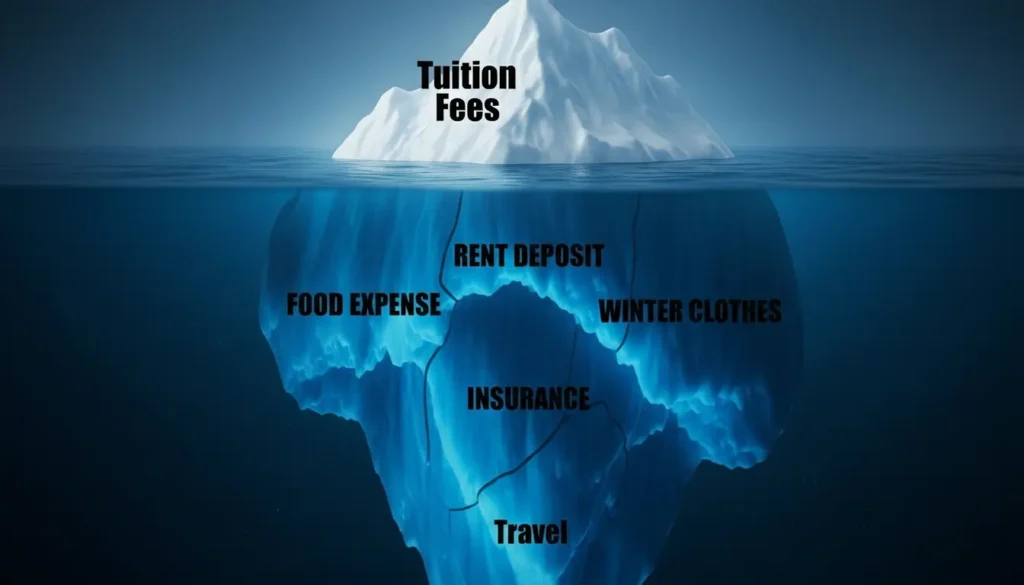
So, you have done the math. You know the university fee. You know the visa fee. You have even calculated your air ticket. You think your budget is set.
But the moment you land in London, Istanbul, or Almaty, your wallet starts bleeding money you didn’t plan for.
Many inexperienced consultants only tell you the “Big Numbers” to get you to sign the contract. They leave out the “Hidden Numbers.” Then, when you arrive, you are forced to call your parents in panic asking for more rupees.
At Luxurious Educational Platform, we believe in Total Cost Transparency. We want you to know the real price of your first month abroad, down to the last cent. Here are the 5 hidden costs you must prepare for.
1. The Accommodation “Deposit” Shock
Most students know they have to pay rent. But they forget the Security Deposit. In the UK or Turkey, landlords often require 1 to 2 months of rent upfront as a security deposit, plus your first month’s rent.
- Scenario: If your rent is £500, you might need £1,500 cash on Day 1 just to get the keys. If you haven’t budgeted for this huge upfront hit, you will have nowhere to sleep.
2. Mandatory Health Insurance
In Pakistan, we aren’t used to paying for health insurance. Abroad, it is often the law.
- UK: You pay the “Immigration Health Surcharge” (IHS) during your visa application (it is expensive!).
- Turkey: You must buy private health insurance to get your Residency Permit.
- China/Kazakhstan: Universities charge a mandatory annual medical insurance fee upon arrival.
- The Cost: This can range from $100 to $1,000 depending on the country.

3. The “Winter Wardrobe” Bill
This is a massive shock for students going to Kazakhstan, China (North), or the UK. Our Pakistani winter clothes are not designed for -20°C in Astana or the wet, freezing wind of London. You cannot survive in a simple sweater. You will need:
- Thermal innerwear.
- Heavy-duty waterproof jackets (Puffer jackets).
- Waterproof boots.
- The Cost: A good winter survival kit can easily cost $300-$500 immediately upon arrival.
4. Transport & Commute
In China or Turkey, universities are often huge or located far from the city center. You won’t have a car or bike. You will rely on buses, tubes, and trams. While student discounts exist, you often have to pay full price for the first few weeks until your Student ID is issued. Daily travel adds up fast.
5. Quarantine & Medical Tests (Post-Arrival)
Some countries (like China or Gulf nations) require fresh medical exams after you land to convert your visa. In Cyprus, you might need specific blood tests upon arrival. These are rarely free and must be paid in cash at the hospital.
The Solution: The “Emergency Buffer”
We always advise our clients to travel with an “Emergency Buffer” of at least $500 – $1000 in cash (or loaded on a card) that is separate from their tuition and rent money.
This isn’t for shopping. It is for the deposit, the coat, the unexpected medical test, or the taxi ride when you get lost.
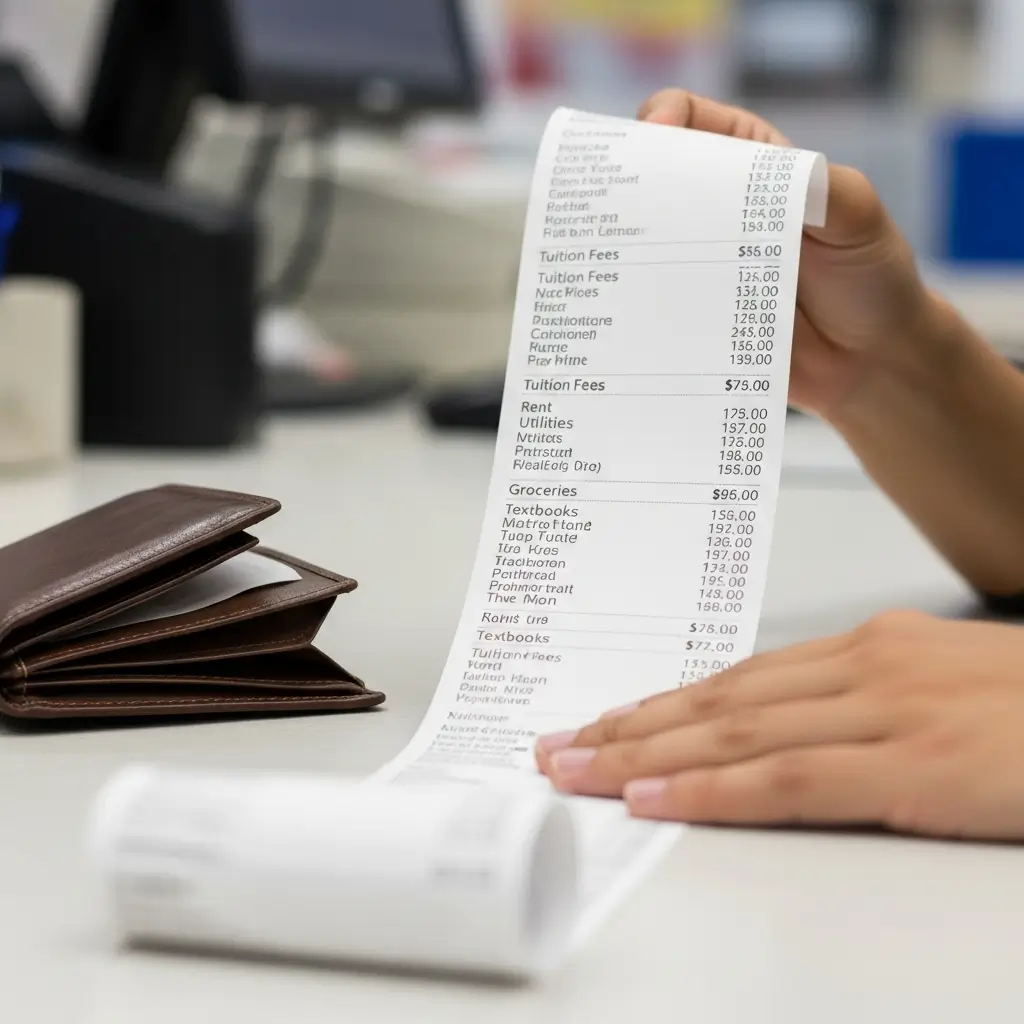
Don’t start your journey broke.
At Luxurious Educational Platform, we help you build a “Landing Budget.” We tell you exactly how much cash to carry in your pocket for Georgia, Iran, or England, so you never have to make that panicked phone home.
Let’s budget for reality, not just tuition.