

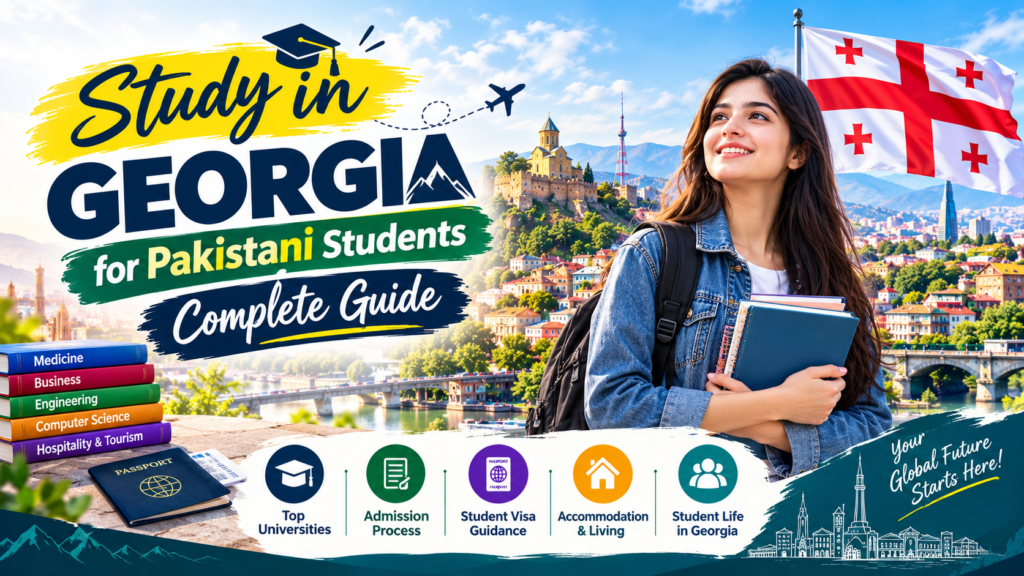
Studying abroad is an important decision for Pakistani students who want to gain an international education, experience a new culture and develop their academic and professional skills. Among the destinations considered by international students, Georgia offers a range of higher-education opportunities in fields including medicine, business, technology, engineering, social sciences and other disciplines.
If you are searching for Study in Georgia from Pakistan, this comprehensive guide explains the major stages of the journey—from selecting a university and course to preparing your application, understanding the student visa process and getting ready to travel.
Georgia’s higher-education system includes bachelor’s, master’s and doctoral levels, while medicine and dentistry have their own integrated structures. The Georgian Ministry of Education also maintains information about authorized higher-education institutions.
Why Study in Georgia?
Choosing a country for higher education requires more than simply looking at university advertisements. Students should consider the education system, available programs, admission requirements, location, costs, accommodation, visa procedures and future career plans.
Georgia may be considered by students looking for an international education environment and a range of academic programs.
Some factors students commonly investigate include:
- International education environment
- Different bachelor’s and postgraduate programs
- Medical and dentistry education
- Business and management programs
- Technology and computer-related programs
- Engineering programs
- Opportunities to experience a different culture
- Universities located in cities such as Tbilisi and Batumi
However, students should research each university individually because admission criteria, tuition fees, language requirements and available programs can differ.
Higher Education System in Georgia
Understanding the education system can help Pakistani students choose an appropriate program.
Georgia’s higher-education system includes three main stages:
1. Bachelor’s Degree
A bachelor’s degree is generally the first stage of higher education. The Georgian Ministry of Education states that bachelor’s programs generally require at least 240 credits.
Students who have completed their higher-secondary education may investigate bachelor’s programs according to the university’s admission requirements.
2. Master’s Degree
A master’s degree is generally pursued after completing a bachelor’s qualification. The Ministry of Education states that master’s programs generally require at least 120 credits.
3. Doctoral Degree
Doctoral education represents an advanced level of academic and research study. The Ministry describes doctoral programs as requiring at least 180 credits.
Medicine and Dentistry
Medicine and dentistry have different structures from standard bachelor’s and master’s programs. Therefore, students interested in these fields should carefully check the exact structure and requirements of their chosen university and program.
Popular Courses to Study in Georgia
The right course depends on your academic background, interests, career plans and eligibility.
International students researching Georgia may find programs in areas such as:
Medicine
Medicine is one of the fields international students frequently investigate when considering Georgia.
Before choosing a medical university, students should check:
- University authorization
- Program status
- Language of instruction
- Admission requirements
- Program duration
- Tuition fees
- Clinical training arrangements
- Recognition and licensing requirements in the country where they eventually intend to practice
A medical degree should never be selected only because of its advertised tuition fee.
Dentistry
Students interested in dentistry can investigate relevant programs offered by Georgian higher-education institutions.
Important factors include:
- Program structure
- University authorization
- Clinical training
- Admission criteria
- Language
- Tuition
- Future professional licensing requirements
Business Administration
Business-related programs may include areas such as:
- Business Administration
- Management
- Marketing
- Finance
- International Business
- Entrepreneurship
These programs may be relevant for students interested in corporate careers, entrepreneurship, management or international business.
Computer Science and Information Technology
Technology-related programs can include:
- Computer Science
- Information Technology
- Software-related studies
- Data-related disciplines
- Cybersecurity
- Information systems
Students should compare course modules rather than choosing a program based only on the degree title.
Engineering
Students with an interest in technical disciplines can investigate engineering programs such as:
- Civil Engineering
- Mechanical Engineering
- Electrical Engineering
- Technology-related programs
Hospitality and Tourism
Georgia’s tourism environment also makes hospitality and tourism-related education an area that international students may research.
Universities in Georgia for International Students
Georgia has a range of public and private higher-education institutions.
The Georgian Ministry of Education publishes information about authorized higher-education institutions. Students should use official sources to verify the status of the institution and the specific program they intend to study.
Examples of institutions appearing in official higher-education information include:
- Ivane Javakhishvili Tbilisi State University
- Tbilisi State Medical University
- Ilia State University
- Georgian Technical University
- University of Georgia
- Caucasus University
- David Tvildiani Medical University
This is not a ranking of these institutions. Each university has different programs, requirements and academic structures.
How to Choose a University
Before applying, compare:
1. Program:
Does the university offer the course you actually want?
2. Authorization/accreditation:
Check the official status of the institution and program.
3. Language:
Confirm the language in which the course is taught.
4. Admission requirements:
Check academic qualifications and other conditions.
5. Tuition:
Obtain the current fee directly from the university.
6. Location:
Consider the city, transportation and accommodation.
7. Career plans:
Consider whether the qualification fits your long-term plans.
Admission Requirements for Pakistani Students
Admission requirements depend on the university and program.
However, students may generally be asked to provide documents such as:
- Valid passport
- Academic certificates
- Academic transcripts
- Previous degree documents, where applicable
- Passport-size photographs
- Application form
- English-language evidence, where required
- Other documents specified by the university
For postgraduate applications, universities may additionally request:
- Bachelor’s degree
- Transcript
- CV
- Motivation/personal statement
- Recommendation letters
- Research proposal for certain programs
Important: This is a general guide. Your university may request additional documents.
Study in Georgia After Intermediate / FSc / A-Levels
Students who have completed intermediate education, FSc, FA, ICS, A-Levels or another recognized secondary qualification can investigate bachelor’s-level opportunities according to the requirements of their chosen institution.
For example, a student interested in medicine should first determine whether their academic subjects and grades meet the university’s requirements.
Students should avoid applying blindly to multiple universities. A better approach is to first identify:
- Your academic background
- Preferred subject
- Preferred city
- Budget
- University requirements
- Future career plans
Study in Georgia After Bachelor’s Degree
Students who already hold a bachelor’s degree may investigate master’s programs in Georgia.
The process can include:
Bachelor’s Degree → University Selection → Program Selection → Application → Admission Decision → Visa Preparation → Travel
For master’s applicants, universities may review the applicant’s previous qualification and whether it is relevant to the proposed field of study.
Georgia University Admission Process
The exact process differs between institutions, but international applicants can generally expect several stages.
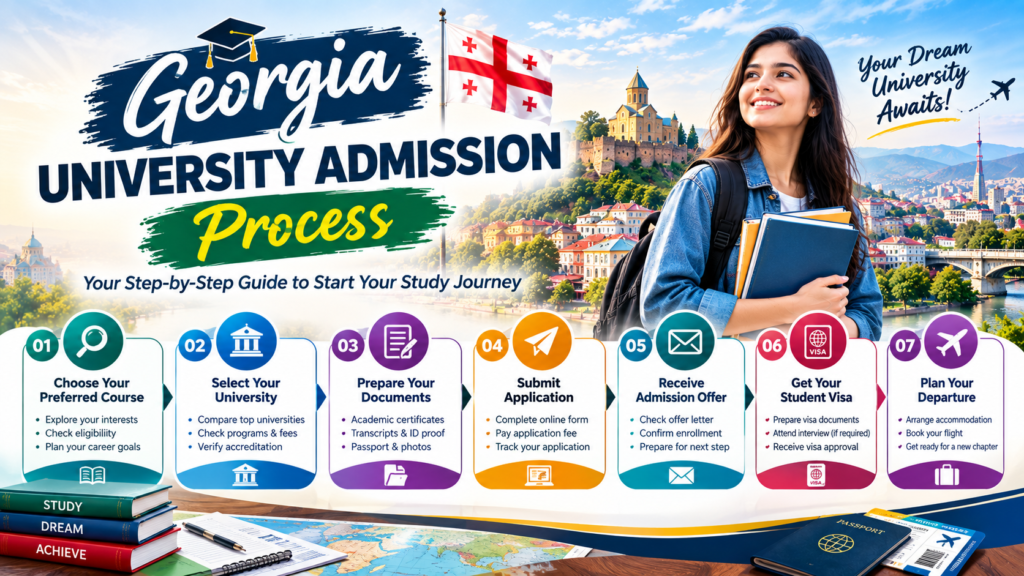
Step 1: Choose Your Course
Start by identifying the field you want to study.
Do not choose a course simply because it appears popular.
Consider your:
- Academic background
- Interests
- Career goals
- Budget
- Future plans
Step 2: Select a University
Compare universities based on:
- Program
- Location
- Tuition
- Admission requirements
- Language
- Authorization/accreditation
- Student support
Step 3: Prepare Documents
Collect your academic and personal documents before starting the application.
Make sure names, dates and passport information are consistent across documents.
Step 4: Submit Application
Complete the university application according to its official instructions.
Some institutions may have additional assessment or interview requirements.
Step 5: Receive Admission Decision
If your application meets the institution’s requirements, the university may issue an admission or offer document.
Step 6: Prepare for the Visa Stage
Once you have the required admission documentation, review the current Georgian immigration and visa requirements applicable to your circumstances.
Georgia Student Visa for Pakistani Students
The visa process is one of the most important parts of studying abroad.
Georgia’s official consular information provides visa guidance, including a study-related immigration visa route for individuals entering Georgia to study at authorized educational institutions.
Students should always verify the current requirements through Georgia’s official consular/immigration channels because requirements and procedures can change.
Documents That May Be Relevant
Depending on your circumstances and the current requirements, you may need documents such as:
- Passport
- University admission documentation
- Visa application
- Photographs
- Financial/supporting documents
- Accommodation information
- Educational documents
- Travel-related documentation
- Other documents requested by the relevant authorities
The exact list should be confirmed from official sources before submitting an application.
How Long Does the Georgia Student Visa Process Take?
Processing time can vary depending on the visa category, application method, documentation and individual circumstances.
Students should therefore:
- Start preparing early
- Check current processing information
- Avoid submitting incomplete documents
- Monitor official instructions
- Keep copies of submitted documents
Do not plan your flight solely around an assumed processing period.
Cost of Studying in Georgia
One of the most important questions for Pakistani students is:
How much does it cost to study in Georgia?
There is no single answer because costs vary significantly according to:
- University
- Course
- Degree level
- City
- Accommodation
- Lifestyle
Tuition Fees
Tuition fees differ between universities and programs.
Medical programs can have different fees from business, IT or engineering programs.
Therefore, students should obtain the latest tuition information directly from the university before making financial decisions.
Living Expenses
A student’s monthly budget may include:
- Accommodation
- Food
- Transportation
- Mobile/internet
- Study materials
- Personal expenses
- Healthcare-related expenses
- Entertainment
- Travel
Accommodation in Georgia
Students can explore different accommodation options depending on the university and city.
Possible options include:
University Accommodation
Some universities may provide or facilitate student accommodation.
Shared Apartment
Sharing an apartment with other students can be an option for reducing individual accommodation expenses.
Private Apartment
Students who prefer greater privacy can investigate private rental options.
What Should You Check Before Renting?
Before paying for accommodation, check:
- Exact location
- Distance from university
- Monthly rent
- Deposit
- Utilities
- Internet
- Contract terms
- Transportation
- Safety and local facilities
Student Life in Georgia
Studying abroad also means adapting to a new environment.
International students can experience:
- New cultures
- Different food
- New languages
- International student communities
- University events
- Local traditions
- New social experiences
Students should prepare themselves for cultural differences and respect local customs.
Living in Tbilisi
Tbilisi is Georgia’s capital and one of the main locations international students consider.
The city offers access to:
- Universities
- Restaurants
- Shopping
- Public transportation
- Entertainment
- Cultural attractions
- Student communities
However, accommodation and living costs can vary by neighborhood, so students should compare locations before choosing where to live.
Living in Batumi
Batumi is another Georgian city that international students may consider.
The city is known for its Black Sea location and has educational institutions, accommodation options and a different lifestyle compared with Tbilisi.
Students should choose a city based on their university location and personal requirements.
Language of Study
Language requirements depend on the program.
Some international programs are offered in English, while other programs may be delivered in Georgian or another language.
Before applying, confirm:
- Language of instruction
- English-language requirements
- Required language certificate
- University interview requirements
Do not assume that every program in Georgia is taught in English.
Is Georgia Suitable for Pakistani Students?
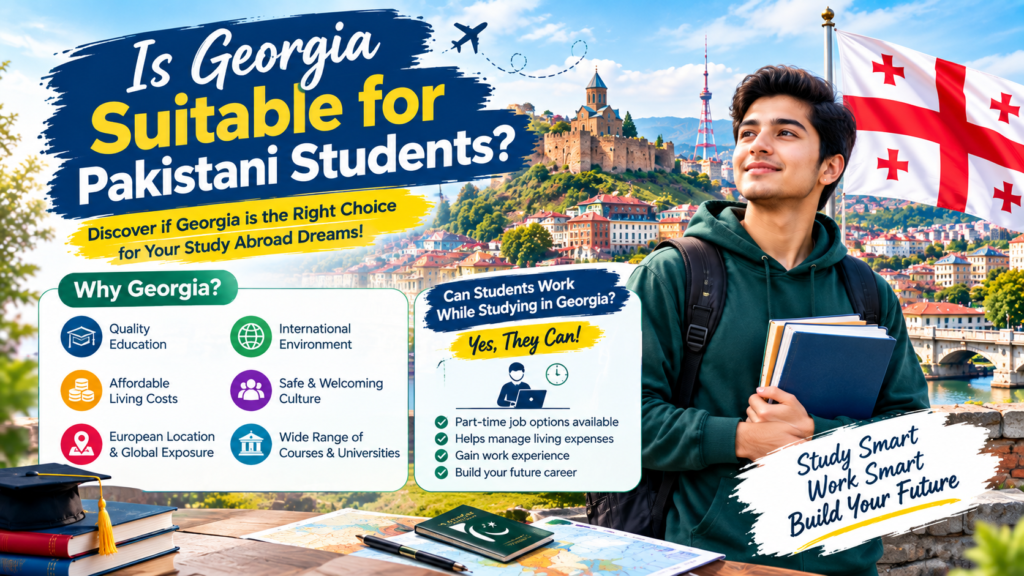
The answer depends on the individual student’s circumstances.
Students should evaluate:
Academic Fit
Does the university offer your preferred program?
Financial Fit
Can you comfortably manage tuition and living costs?
Career Fit
Does the degree support your future career plans?
Visa Fit
Can you satisfy the applicable immigration requirements?
Personal Fit
Are you comfortable living and studying in another country?
These questions can help students make a more informed decision.
Scholarships for Studying in Georgia
Students interested in studying in Georgia should research scholarship and financial-support opportunities offered by:
- Universities
- Government institutions
- International organizations
- External scholarship providers
Scholarship availability, eligibility and deadlines vary.
Students should always check the official scholarship provider’s website rather than relying on social-media advertisements.
Can Students Work While Studying in Georgia?
Students who plan to work while studying should carefully check Georgia’s current immigration, residence and employment rules.
Do not assume that a student status automatically gives you unrestricted permission to work.
Before accepting employment, verify the applicable legal requirements with the relevant Georgian authorities.
Documents to Prepare Before Traveling to Georgia
Once your admission and visa arrangements are completed, create a complete travel folder.
Academic Documents
Keep copies of:
- Certificates
- Transcripts
- Admission letter
- University documents
Personal Documents
Keep:
- Passport
- Visa/immigration documents
- Passport photographs
- Identification documents
Financial Documents
Keep relevant financial/supporting documentation where applicable.
Digital Backup
Scan your important documents and store secure digital copies.
This can be useful if your original documents are lost or damaged.
Pre-Departure Checklist for Pakistani Students
Before leaving Pakistan, review this checklist:
☑ Passport
☑ Visa/immigration documents
☑ University admission documents
☑ Academic certificates
☑ Accommodation confirmation
☑ Flight booking
☑ Financial arrangements
☑ Emergency contacts
☑ Travel insurance/health documentation where applicable
☑ Mobile/communication arrangements
☑ Essential medicines and personal items
☑ Digital copies of important documents
Common Mistakes Students Should Avoid
1. Choosing a University Only Because of Low Fees
A low tuition fee does not automatically mean that the university is suitable for your academic and career plans.
2. Not Checking University Authorization
Always verify the institution and program through appropriate official sources.
3. Using Outdated Visa Information
Visa policies can change. Check official information before applying.
4. Ignoring Future Recognition
Especially for regulated professions such as medicine, students should investigate future licensing and recognition requirements.
5. Paying Without Verification
Before making payments, verify the university, official payment instructions and relevant documentation.
6. Leaving Visa Preparation Until the Last Moment
Admission and visa preparation should be planned together.
7. Choosing a Course Without Career Planning
Your degree should fit your academic background and long-term goals.
Why Professional Guidance Can Help
Studying abroad involves several interconnected stages.
A student may need to manage:
Course Selection → University Selection → Documentation → Application → Admission → Visa → Accommodation → Travel
Missing an important requirement can create unnecessary delays.
Professional education consultants can help students understand the process, organize documents and identify questions they should ask universities and relevant authorities.
However, students should always verify important admission and visa information with the official university and government sources.
Study in Georgia with Luxurious Educational Platform
Planning to study in Georgia from Pakistan?
Luxurious Educational Platform can help students understand the study-abroad journey and organize the next steps.
Our guidance can cover:
🎓 Course & University Selection
📄 Application & Documentation Guidance
📩 Admission/Offer Letter Guidance
🛂 Student Visa Guidance
🎤 Interview Preparation
🏠 Pre-Departure Assistance
✈️ Travel Preparation
Our goal is to help students move through the process with better preparation and clear information.
Frequently Asked Questions About Study in Georgia
Is Georgia a good option for Pakistani students?
Georgia can be considered by Pakistani students looking for international higher-education opportunities. Suitability depends on the student’s university, program, budget, academic background and career plans.
Can Pakistani students study medicine in Georgia?
Yes, Pakistani students can research medical programs offered by Georgian higher-education institutions, subject to the university’s admission requirements and applicable regulations.
How can I apply to a Georgian university?
The general process involves selecting a program, checking eligibility, preparing documents, submitting an application and completing the university’s admission process.
Do I need a student visa to study in Georgia?
Students should determine the applicable visa/immigration status based on their nationality, purpose and duration of stay. Georgia’s official consular information should be checked for the current requirements.
How much does it cost to study in Georgia?
Costs vary by university, course and lifestyle. Tuition should be confirmed directly with the selected university, while living expenses depend on accommodation, food, transport and personal spending.
Can I study in Georgia after FSc?
Students with FSc or another recognized secondary qualification can investigate bachelor’s-level programs according to the admission requirements of their selected university.
Can I study in Georgia after A-Levels?
Yes, students with A-Levels can research bachelor’s programs, subject to the university’s eligibility requirements and document verification.
What documents are required?
Requirements vary, but students may need a passport, academic certificates, transcripts, photographs, admission documents and other university or visa-related documents.
Is English used in Georgian universities?
Some programs are offered in English, particularly programs designed for international students. Students should confirm the language of instruction for their specific program.
Final Thoughts
Studying in Georgia can be an opportunity to pursue an international education while experiencing a new academic and cultural environment. But choosing the right university and course requires proper research.
Before applying, Pakistani students should carefully evaluate:
- University
- Program
- Authorization/accreditation
- Tuition
- Admission requirements
- Language
- Visa requirements
- Accommodation
- Living expenses
- Future career plans
Most importantly, always verify current admission and immigration information through official sources before making payments or final travel arrangements.
🌍 Ready to Start Your Study in Georgia Journey?
Luxurious Educational Platform is here to guide you from Admission Offer to Student Visa and beyond.
📞 Call / WhatsApp: +92 3070615020
📧 Email: info@luxuriouseducationalplatform.com
Your Dream. Our Guidance. Global Opportunities.